Health and Safety Policy for Cleaners Enfield
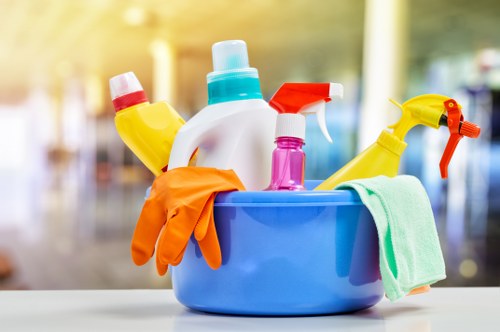 Cleaners Enfield is committed to creating a safe, healthy, and well-managed working environment for everyone involved in cleaning activities. This policy explains the standards, responsibilities, and practical controls that help reduce risks and support consistent safe cleaning practices. It applies to all employees, supervisors, contractors, and anyone carrying out cleaning duties on our behalf.
Our approach is based on prevention, awareness, and proper planning. We recognise that cleaning work can involve manual handling, working with chemicals, slippery surfaces, electrical equipment, and repetitive tasks. To manage these risks, we require all cleaning staff to follow the agreed procedures, use equipment correctly, and report concerns promptly. We also expect managers to provide clear instructions, suitable training, and regular oversight.
Our Health and Safety Commitment
As a responsible cleaning company, we aim to maintain workplaces that are safe for staff, clients, and the public. This means identifying hazards before work begins, choosing appropriate control measures, and making sure cleaning tasks are completed without unnecessary risk. We take special care to protect vulnerable areas such as kitchens, stairways, washrooms, and shared spaces where hazards can develop quickly.
Key Responsibilities
Management is responsible for providing safe systems of work, suitable equipment, and information on workplace hazards. Supervisors must ensure tasks are assigned to competent workers and that any issues are resolved quickly. Cleaners must follow instructions, wear any required protective equipment, and use caution when moving around occupied or recently cleaned areas. Everyone has a duty to look after their own safety and the safety of others.
Risk assessments will be carried out for routine and non-routine activities. These assessments consider the surface being cleaned, the method used, the products selected, and the likelihood of exposure to hazards. Where necessary, additional controls may be introduced, such as warning signs, restricted access, or changes to working methods. The aim is always to reduce risk to the lowest reasonably practicable level.
All staff are expected to raise concerns without delay if they notice unsafe conditions, damaged equipment, missing labels, spilled substances, or anything that could affect safe working. We encourage an open reporting culture so that small problems can be addressed before they become serious incidents. Good communication is an important part of commercial cleaning safety and helps maintain high standards across every site.
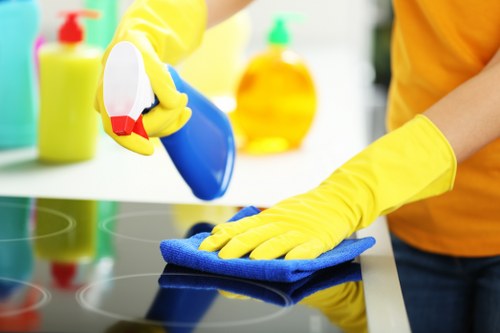 Training and Competence are essential to safe cleaning operations. Every cleaner must receive instruction on the correct use of tools, machinery, chemicals, and protective equipment before carrying out tasks independently. Training also covers manual handling, fire awareness, emergency procedures, and how to respond to accidents or spills. Refresher training is provided when work methods change or when performance indicates that further support is needed.
Safe Working Practices
To prevent slips, trips, and falls, wet floors must be marked clearly, access routes kept tidy, and cleaning equipment stored safely when not in use. Cables, mops, buckets, and hoses should never create avoidable obstacles. Special attention must be paid to areas with limited lighting, uneven flooring, or heavy foot traffic. We also encourage a cleaners health and safety policy that promotes good housekeeping at all times.
Manual handling is another major concern. Staff should avoid lifting heavy loads alone, use carts or trolleys where available, and ask for assistance when moving awkward or bulky items. Safe posture, controlled movements, and task rotation can help reduce strain and fatigue. If a job feels unsafe, it should be paused and reviewed before work continues.
 Chemical Safety is managed through proper storage, clear labelling, and correct dilution of all cleaning products. Products must never be mixed unless the instructions specifically allow it, and staff must use the right protective gloves or eye protection where required. Safety data information should be available to workers who need it, and containers must be kept closed when not in use.
Equipment, including vacuum cleaners, floor machines, and extension leads, must be checked regularly for damage and used only for their intended purpose. Any defective item should be taken out of service immediately and reported. Electrical safety is especially important in areas where water is used, so care must always be taken to keep plugs, sockets, and cables dry.
Personal Protective Equipment and Welfare
Where risk cannot be fully controlled by other means, appropriate personal protective equipment, or PPE, will be provided and must be worn correctly. This may include gloves, masks, aprons, safety footwear, or eye protection depending on the task. PPE should be kept clean, stored properly, and replaced when worn or damaged.
We also recognise the importance of welfare. Cleaners should have access to drinking water, suitable rest breaks, and a reasonable workload. Fatigue can increase the likelihood of mistakes, so working patterns must allow for recovery and concentration. In addition, staff should not be asked to work in unsafe conditions simply to complete a task quickly.
If an accident, near miss, or exposure to a hazardous substance occurs, it must be reported immediately and recorded according to company procedures. Emergency action should be taken without delay, including first aid, isolation of the area, or contacting the appropriate emergency services when required. Investigations will focus on learning lessons and improving future prevention rather than assigning blame.
 We are committed to reviewing this policy regularly so that it remains effective and relevant. Reviews may be prompted by changes in working methods, equipment, legislation, or incident trends. This helps ensure our cleaning services health and safety standards continue to protect people and support reliable operations. Continuous improvement is central to our approach.
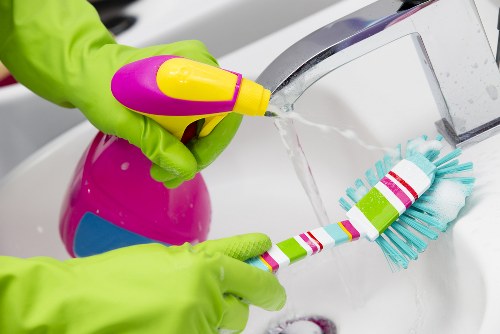 In conclusion, this policy sets out the standards expected from Cleaners Enfield in delivering safe, responsible, and professional cleaning work. By combining training, supervision, good communication, and careful risk control, we can reduce harm and maintain a safe environment for everyone. Health and safety is a shared responsibility, and every cleaner plays an important part in making it work.